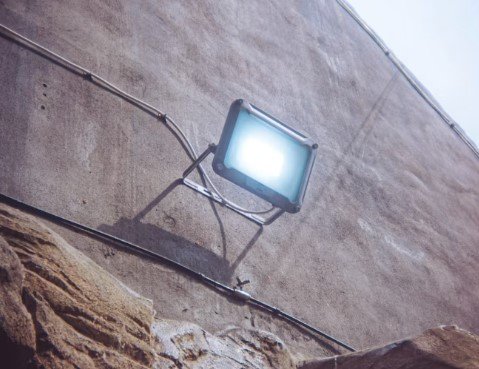
Outdoor visibility can have a major effect on how easily people can observe activity around a property after dark. Poorly illuminated entrances, pathways, parking areas, and side passages can make it harder for residents, employees, visitors, and security personnel to see what is happening.
Security lighting is therefore an important part of many property protection plans. However, simply installing bright lights everywhere does not automatically create better security. Placement, coverage, controls, maintenance, and the surrounding environment all matter.
What Is Security Lighting?
Security lighting refers to outdoor lighting designed to improve visibility around areas where safety or security is important.
Common locations include entrances, driveways, parking areas, walkways, gates, loading zones, garages, and building perimeters.
The purpose is to make important areas easier to observe and navigate, particularly when natural light is limited.
Why Lighting Matters at Night
Dark areas can reduce visibility for people using or monitoring a property.
A properly illuminated entrance allows visitors and employees to see where they are going, while property managers or security personnel can more easily observe activity.
Lighting can also support the effectiveness of other security measures by improving the visibility of areas monitored by cameras or regularly checked by staff.
Focus on Important Areas
A common mistake is treating every part of a property equally.
Instead, identify the areas where visibility matters most.
Entrances, gates, parking spaces, walkways, building corners, loading areas, and equipment storage zones may require more attention than areas that are already naturally visible or rarely used.
Entrance Lighting
Entrances are particularly important because people regularly approach and leave through them.
Lighting should provide enough visibility for people to identify the doorway, access controls, and immediate surroundings.
Poorly positioned fixtures can create shadows directly around the entrance, so placement should be considered carefully.
Parking Area Lighting
Parking areas should allow drivers and pedestrians to see their surroundings.
Lighting can help people identify vehicles, walkways, signs, and other objects after dark.
Large parking facilities may require multiple fixtures positioned to minimize dark areas rather than relying on one extremely bright light.
Motion-Activated Lighting
Motion-activated lights can be useful in locations where continuous illumination is unnecessary.
When movement is detected, the light activates and improves visibility.
These systems can be particularly useful around side entrances, pathways, garages, and less frequently used outdoor areas.
However, settings should be adjusted appropriately to reduce unnecessary activation.
Avoid Excessive Glare
Brighter is not always better.
Excessive glare can make it harder for people to see clearly and can actually reduce visibility in certain circumstances.
Lights should be positioned so they illuminate the intended area without shining directly into people’s eyes or creating distracting reflections.
Consider Camera Placement
Lighting and surveillance can complement one another.
A camera may provide useful footage during the day but struggle when an area becomes poorly illuminated at night.
When planning outdoor surveillance, property owners should consider how lighting conditions affect the camera’s field of view.
Keep Vegetation Under Control
Trees, bushes, and other landscaping can affect lighting coverage.
Overgrown vegetation can block fixtures, create shadows, or obstruct views between different parts of the property.
Regular landscaping maintenance can therefore support both lighting and general visibility.
Use Lighting Controls
Different properties have different operating requirements.
Timers, motion sensors, photocells, and other controls can help manage when lights operate.
A commercial property may require continuous lighting in certain areas, while a residential property may use automated activation during nighttime hours.
Maintain Outdoor Fixtures
Outdoor equipment is exposed to weather, dust, moisture, insects, and physical damage.
Lights should be inspected periodically to make sure fixtures are functioning correctly and remain properly positioned.
Replacing failed bulbs or damaged equipment quickly is important because one failed light can create an unexpected weak point.
Lighting for Businesses
Businesses can use outdoor lighting around entrances, parking lots, loading areas, storage locations, and building perimeters.
The exact arrangement should reflect the building’s layout and operating schedule.
Businesses should also consider how employees move around the property before opening and after closing.
Lighting for Residential Properties
Homeowners can use outdoor lighting around front doors, garages, driveways, side paths, gates, and other important locations.
Motion-activated fixtures can be especially convenient for areas that do not need to remain illuminated throughout the night.
Final Thoughts
Security lighting is a relatively simple part of a broader property protection strategy, but it needs to be planned properly.
The most useful approach focuses on important areas, provides consistent visibility, avoids excessive glare, works alongside other security measures, and receives regular maintenance.
Good lighting should make a property easier to see and use safely without creating unnecessary brightness or expense.
For More Visit Watchmen Protective