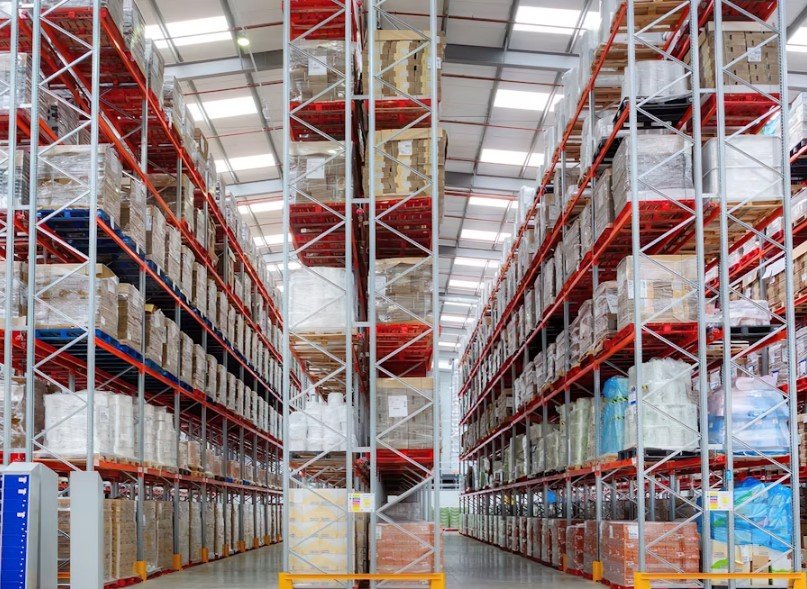
Warehouses can contain large amounts of inventory, expensive equipment, vehicles, documents, and other business assets. Their large layouts, loading areas, multiple entrances, and frequent movement of employees and delivery personnel can make security more complicated than in a small office.
A warehouse protection strategy should therefore consider the entire facility rather than focusing only on the main entrance.
Understand the Warehouse Layout
The first step is understanding how people, vehicles, inventory, and equipment move through the building.
Important areas may include receiving docks, shipping areas, inventory storage, offices, equipment rooms, employee entrances, and vehicle parking.
Each area can have different security requirements.
Control Employee Access
Employees may need different levels of access depending on their responsibilities.
For example, warehouse staff may need access to storage areas while administrative employees may only require access to offices.
Clearly defined permissions can reduce unnecessary movement through sensitive areas.
Manage Loading and Receiving Areas
Loading docks are especially important because many people and vehicles may enter and leave during normal operations.
Businesses should establish clear procedures for deliveries, pickups, contractors, and visitors.
Documentation and verification processes can help reduce confusion about what should be entering or leaving the facility.
Organize Inventory Properly
Good organization can support security as well as efficiency.
When inventory is properly labeled and stored, missing items are easier to identify.
Businesses should pay particular attention to high-value products and items that are small enough to be removed easily.
Inventory checks can also help identify patterns rather than waiting for a major discrepancy to appear.
Monitor Important Areas
Monitoring can provide additional visibility around entrances, loading areas, storage sections, and other locations.
The goal should be useful coverage rather than simply having as many devices as possible.
Monitoring arrangements should be reviewed whenever the warehouse layout changes.
Secure Vehicles and Equipment
Forklifts, delivery vehicles, tools, machinery, and other equipment can represent substantial assets.
Businesses should have clear procedures for equipment use, storage, keys, and access.
Vehicles should be parked in appropriate areas when not being used, while smaller equipment should be secured according to its value and risk.
Pay Attention to After-Hours Conditions
Warehouses may have limited staffing during evenings, weekends, or holidays.
Security arrangements should reflect these periods rather than focusing only on normal operating hours.
Controlled entrances, appropriate lighting, monitoring, and clearly assigned responsibilities can help maintain protection when fewer workers are present.
Train Warehouse Employees
Employees should understand basic security procedures.
Training can cover reporting suspicious behavior, protecting access credentials, following receiving procedures, handling visitors, and reporting missing or damaged inventory.
Employees who work around valuable goods every day can often identify unusual situations quickly when they know what to look for.
Review Contractor and Visitor Access
Warehouses frequently interact with external drivers, suppliers, maintenance workers, and contractors.
Visitors should have a clear process for entering and moving through the facility.
Where appropriate, access should be limited to areas necessary for the visitor’s task.
Protect Offices and Sensitive Records
Warehouse security should not stop at inventory.
Many facilities contain offices, computers, employee records, shipping documents, customer information, and other sensitive material.
These areas may need different protection from the warehouse floor.
Review Security After Inventory Losses
When inventory goes missing, businesses should investigate the process rather than simply replacing the lost goods.
Questions may include whether access was properly controlled, whether receiving records were accurate, whether storage areas were adequately monitored, and whether procedures were consistently followed.
The goal is to identify weaknesses that could cause the same problem again.
Final Thoughts
Warehouse protection requires coordination between physical security, inventory management, employees, visitors, and daily operations.
Controlled access, organized storage, monitored critical areas, secure equipment, employee awareness, and consistent receiving procedures can all contribute to a stronger environment.
Because warehouse operations change frequently, security measures should also be reviewed whenever the layout, inventory, staffing, or operating schedule changes.
For More Visit Watchmen Protective